CNC machining is a highly precise yet complex manufacturing process where costs can escalate quickly. Managing these expenses is a common challenge for CNC design and manufacturing engineers. Below is a comprehensive guide featuring 14 proven DFM (Design for Manufacturability) strategies to minimize your CNC machining costs.
Before diving into design optimization, let’s quickly look at the primary drivers of CNC machining expenses:
Machining Time & Geometric Complexity: More complex geometries require longer cycle times, directly increasing costs.
Engineering & Programming Costs: This includes fixed expenses derived from CAD modeling, CAE simulation, and CAM programming.
Material Selection & Machinability: Raw material bulk pricing and how easily a material can be cut significantly impact the bottom line.
Surface Finishing: Secondary operations add processing steps and labor.
To achieve maximum cost efficiency, engineers should consistently design parts with simplified geometries and standardized features. Here is how to optimize your designs to achieve the lowest possible production cost:
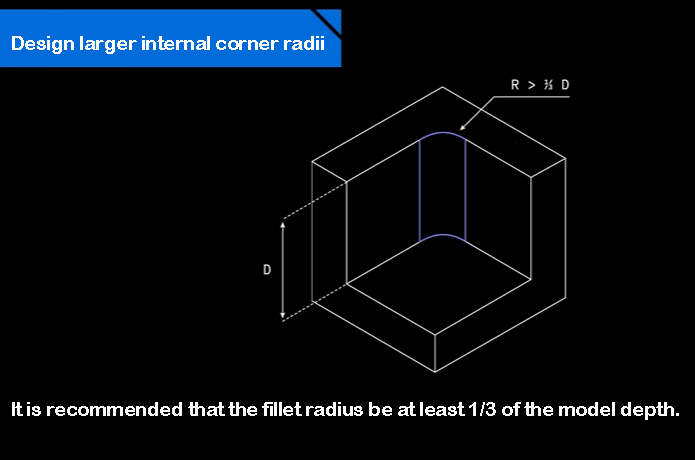
1.Design Larger Internal Corner Radii
When internal corner radii are too small, machinists must use smaller diameter cutting tools. This requires multiple slow passes to remove material without breaking the tool, which drastically drives up machining time and cost. Larger radii allow for larger tools that can remove material rapidly in a single pass. DFM Recommendation: Ensure the internal corner radius (R) is at least 1/3 of the model depth (D).
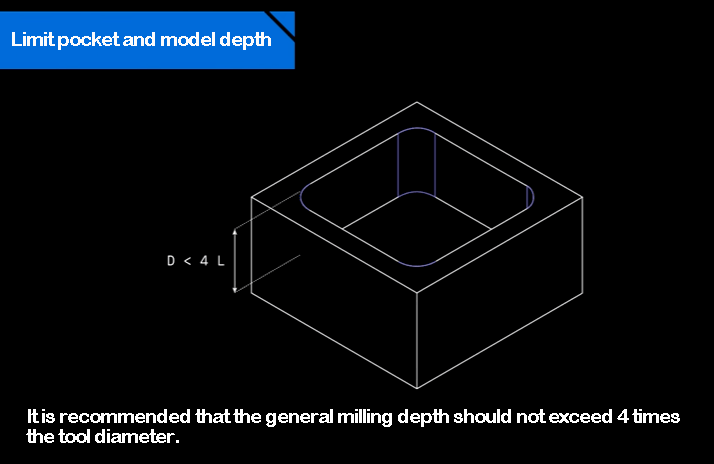
2. Limit Pocket and Model Depth
Machining deep pockets requires removing a massive volume of material, which is highly time-consuming and expensive. Deep cavities also demand specialized long-reach tools that are prone to deflection and tool breakage.
DFM Recommendation: As a rule of thumb, limit the milling depth to no more than 4 times the tool diameter.
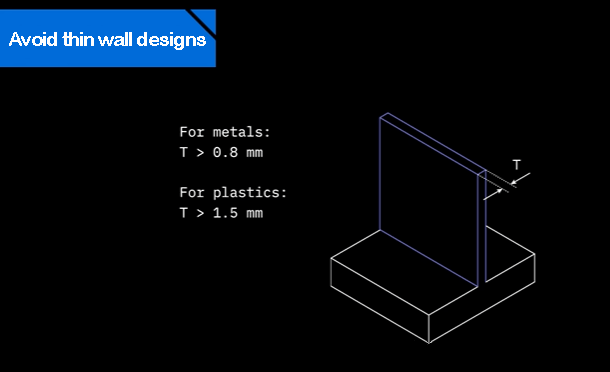
3. Avoid Thin Wall Designs
Thin walls lead to part distortion, chattering, and high scrap rates. To prevent this, machinists must slow down feed rates and implement specialized, slow-machining techniques, making the parts significantly more expensive. Thicker walls ensure rigid, stable, and cost-effective machining.
DFM Recommendation: Maintain a minimum wall thickness of 0.8 mm for metal parts and 1.5 mm for plastic parts.
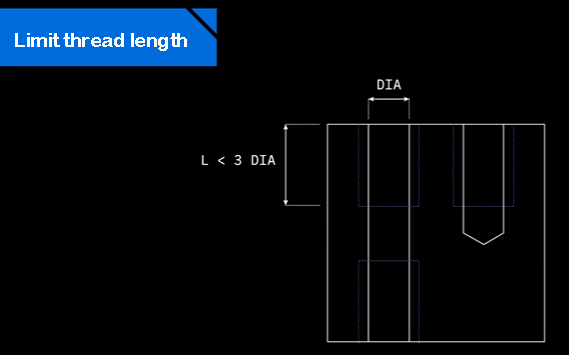
4. Optimize and Limit Thread Length
High-strength thread engagement occurs primarily within the first few threads; designing excessively long threads offers no mechanical advantage. Deep tapped holes require specialized tooling and increase the risk of tap breakage.
DFM Recommendation: Limit the thread length (L) to no more than 3 times the hole diameter(DIA)
5. Design Standard Hole Sizes
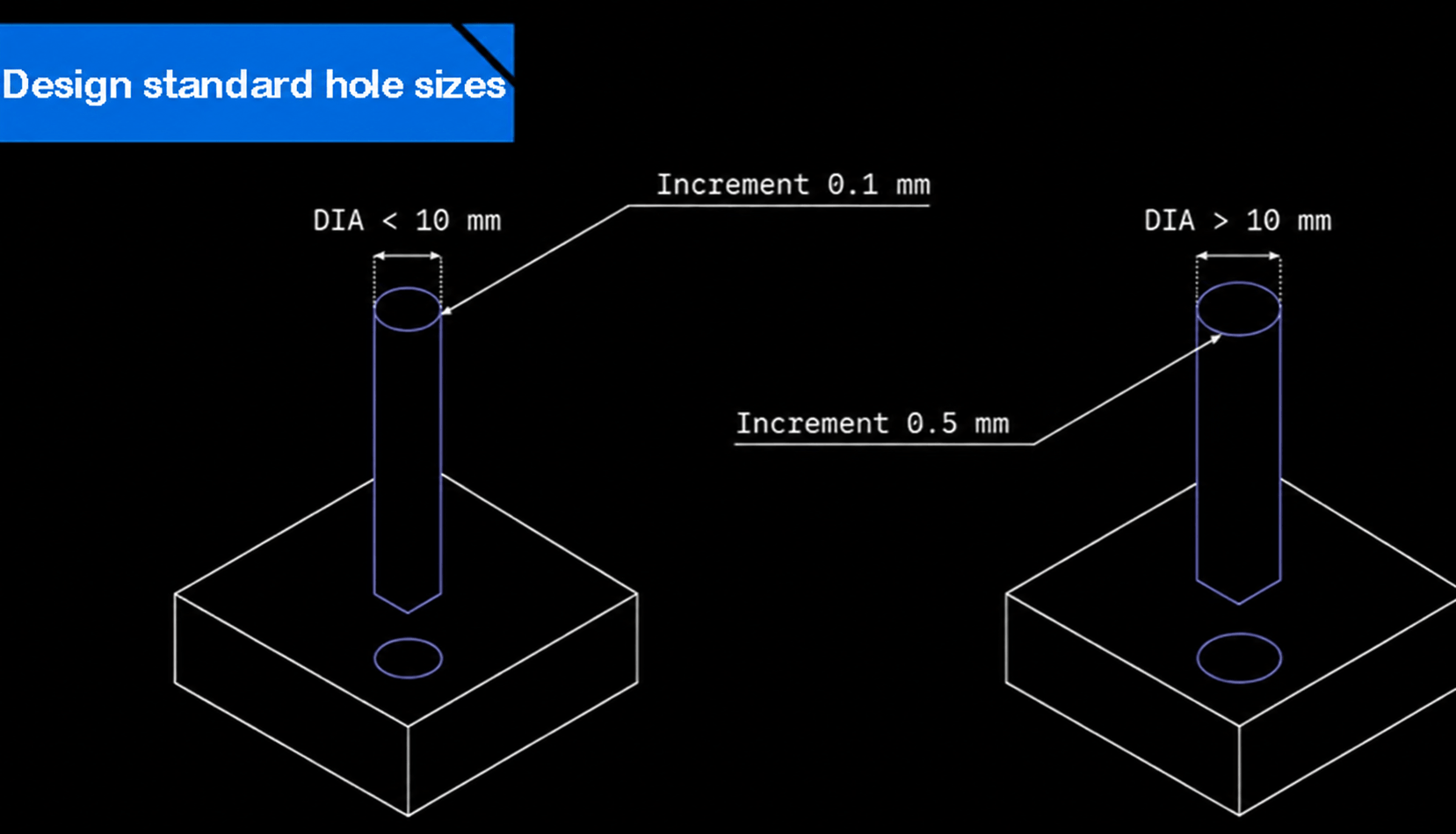
Non-standard hole sizes cannot be machined with standard drill bits and must be helical-milled using end mills, adding significant cycle time and cost. Standard drill bits can produce precise holes extremely quickly.
DFM Recommendation: Utilize standard drill bit sizes.
For diameters under 10 mm, design in 0.1 mm increments.
For diameters over 10 mm, design in 0.5 mm increments
Specify Tight Tolerances Only When Necessary
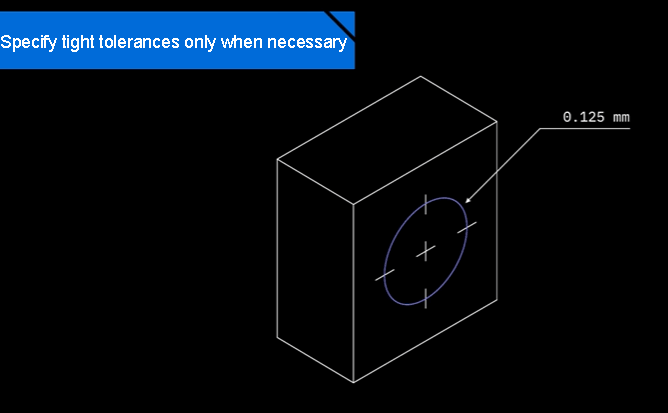
Unnecessarily tight tolerances significantly inflate CNC costs. Tight tolerances demand slower machining speeds, specialized finishing processes, and mandatory manual inspection.
DFM Recommendation: Only specify tight tolerances for critical mating features. Non-specified dimensions will be machined using standard manufacturing tolerances (typically ±0.125 mm).
7. Minimize CNC Machine Setups (Fixturing)
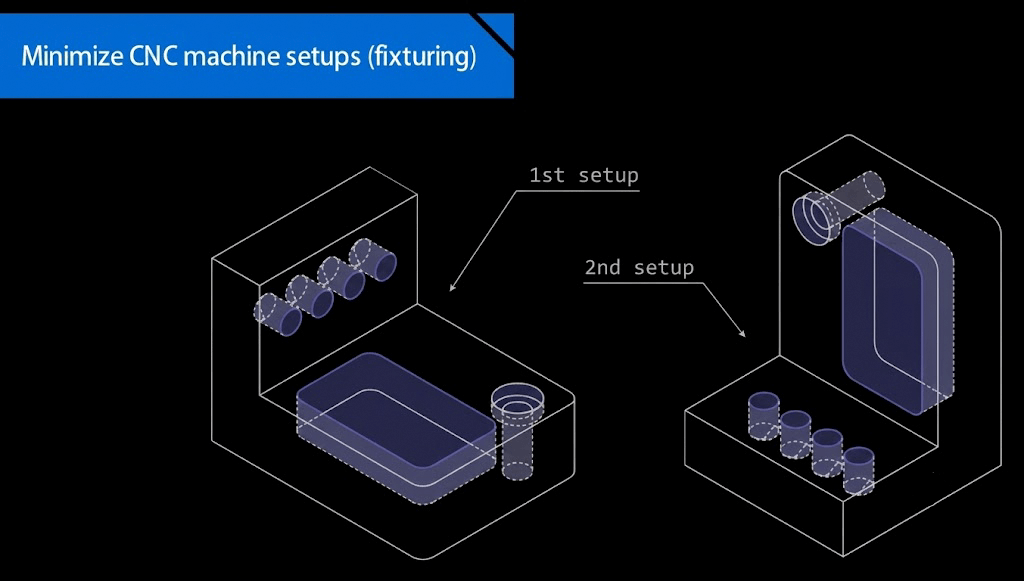
Flipping, rotating, or repositioning a part during production requires manual intervention, which drives up labor costs. Complex multi-sided geometries also require expensive custom fixturing or advanced multi-axis (4-axis or 5-axis) CNC systems.
DFM Recommendation: Try to design all machinable features on a single plane. If multi-sided machining is unavoidable, consider splitting the component into separate parts that can be machined in a single setup and later assembled via bolts or welding.
8. Avoid Small Features with High Aspect Ratios
Small, tall features with a high aspect ratio (height-to-width) are highly susceptible to severe vibration and chatter during cutting, making precise machining incredibly difficult.
DFM Recommendation: To improve structural rigidity and lower costs, connect these features to thicker walls or reinforce them with supporting ribs/braces.
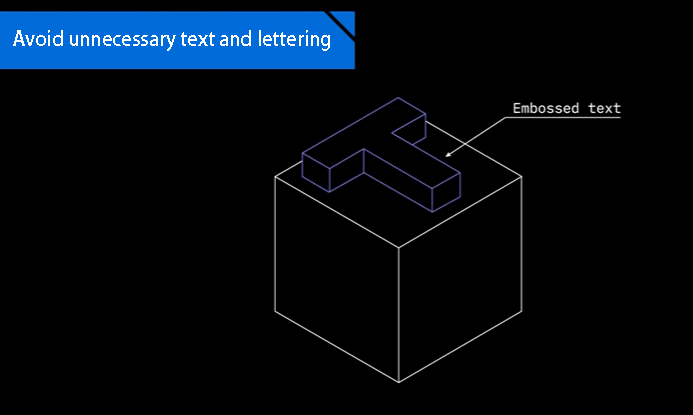
9. Eliminate Unnecessary Text and Lettering
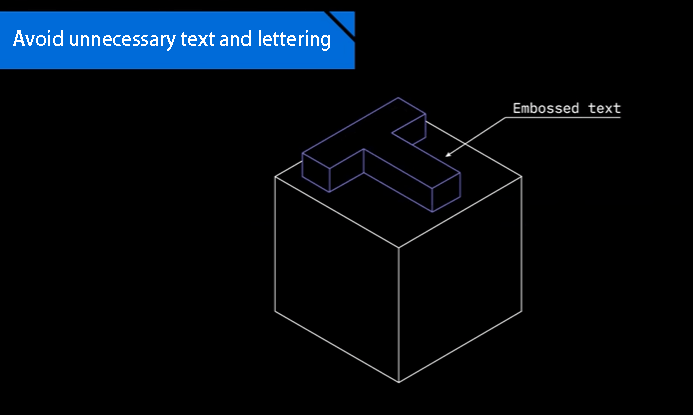
Engraving or embossing text onto a CNC machined surface adds extra programming and machining steps, noticeably increasing costs.
DFM Recommendation: Avoid CNC-machined lettering. For branding, serialization, or labeling, cost-effective post-processing methods such as silk-screening or stenciled painting are highly recommended.
10. Consider Material Machinability
Machinability refers to how easily a raw material can be cut. Materials with high machinability can be processed at much faster cutting speeds, directly reducing machine cycle time and overall cost. Generally, softer and more ductile metal alloys are easier to machine.
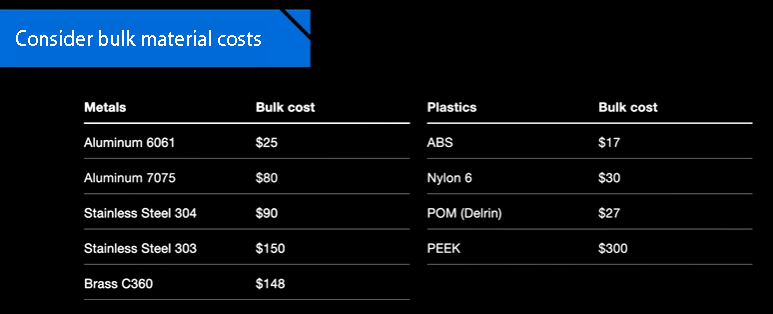
- Evaluate Bulk Material Costs
Raw material pricing is a dominant factor in the final cost of a CNC part. Choosing the right material for the application prevents over-engineering.
12. Avoid Combining Multiple Surface Finishes
While surface finishes improve aesthetics and environmental resistance, applying multiple different finishes on a single part requires tedious masking and extra processing steps, heavily inflating the price.
DFM Recommendation: Stick to a uniform surface finish across the entire component whenever possible.
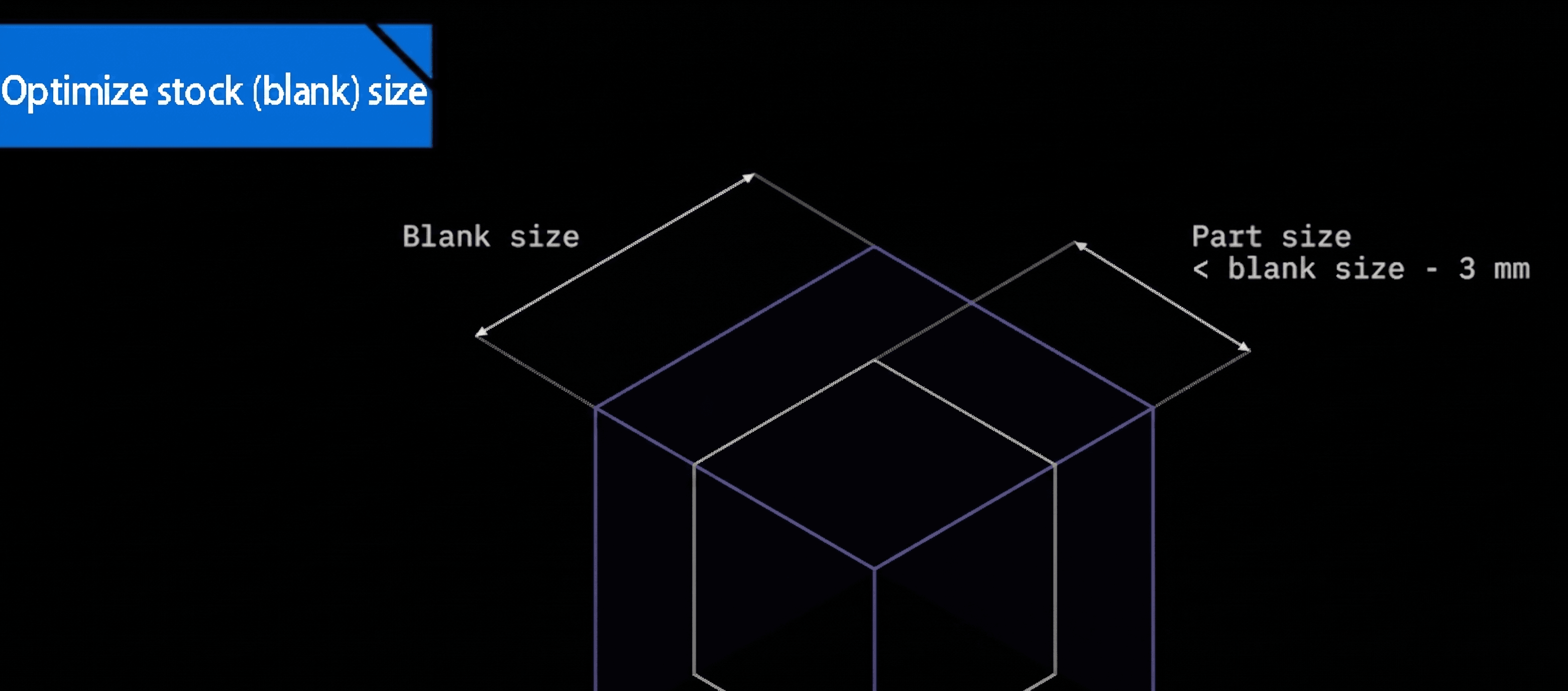
13. Optimize Stock (Blank) Size
The dimensions of the initial raw material block (the blank) dictate material waste and cost, especially for high-volume production orders. To achieve high precision, material must be faced off from all outer edges.
DFM Recommendation: As a rule of thumb, the raw material blank should be at least 3 mm larger than the final oversized dimensions of the finished part.
14. Leverage Economy of Scale with Bulk Ordering
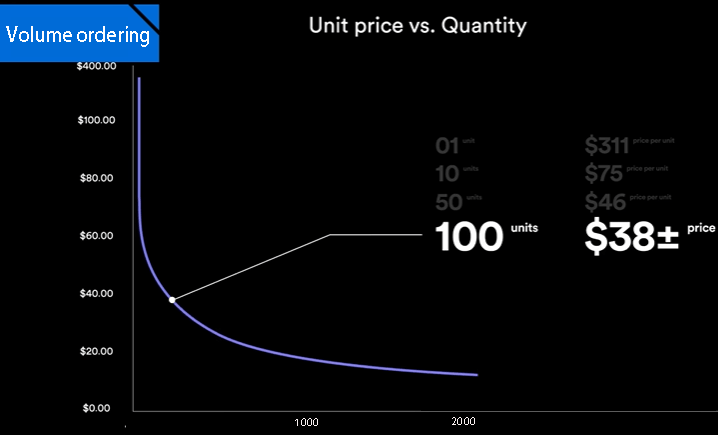
Setup and CAM programming costs are fixed. When ordering in low volumes, these upfront costs account for a massive percentage of the per-part price. By increasing order quantities, fixed overhead costs are distributed across more units, dramatically lowering the unit price.
DFM Recommendation: Consolidate your orders into higher volume batches to maximize CNC manufacturing efficiency and cost-effectiveness.