
If you ask most engineers what a glass insulator does, you’ll usually get the obvious answer: “It isolates electrical connections.”
While true, that’s only the baseline requirement. In high-reliability electronics, over 90% of glass-to-metal seal (GTMS) insulators are chosen for reasons that have little to do with basic electrical isolation.
In this guide, we strip away the generic definitions and look at the actual engineering value, material trade-offs, and critical selection criteria for electronic-grade glass insulators.
1. Clear Up the Misconception: Power Grid vs. Electronic GTMS Insulators
Much of the confusion comes from historical naming.
Power Grid Glass Insulators: Large toughened glass shells built for high-voltage power lines. Their primary job is outdoor physical mounting and high-voltage line isolation.
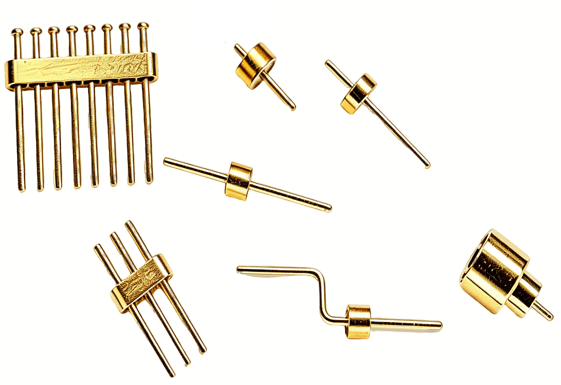
Electronic GTMS Insulators: Sub-millimeter precision glass beads used in RF, microwave, aerospace, and hermetic packages. Their primary job is maintain vacuum integrity, precise impedance matching, and signal pass-through under extreme thermal cycling.
Treating insulation as the only job of a glass insulator is missing the bigger picture. Insulation gets you in the door; performance keeps the system running.
2. The 3 True Core Values of Electronic Glass Insulators
A. Zero-Leakage Hermetic Sealing
Hermeticity is where glass-to-metal sealing is irreplaceable.
Modern radar T/R modules, vacuum chambers, and defense electronics must protect sensitive internal dies from moisture, oxygen, and pressure loss. Signal pins must cross through the metal housing without introducing leak paths.
Polymers and standard epoxies degrade, outgas, and leak over time. Glass, when high-temperature sintered with matching metals (like Kovar or stainless steel), forms a rigid, molecular-level bond. High-performance GTMS feedthroughs routinely achieve helium leak rates as low as 1X10⁻⁹ Pa.m3 /s,keeping internal cavities completely isolated.
Technical Trade-off: Alumina Ceramic(Al2O3) VS.Glass Insulators
Why not use ceramics for everything?
Alumina ceramics offer higher mechanical strength and raw thermal conductivity. However, glass formulations allow a much closer Coefficient of Thermal Expansion (CTE) match with standard housing alloys across wide temperature ranges (-55°C to +200°C)This makes glass far less prone to micro-fracturing and vacuum failure under harsh thermal shock.
B. Stable High-Frequency & Low Dielectric Loss (mmWave Performance)
At microwave and millimeter-wave (mmWave) frequencies, standard dielectric materials suffer from high dielectric loss and phase instability. This causes noticeable insertion loss and severe impedance mismatches.
Electronic-grade glass beads provide an extremely stable dielectric constant and minimal loss tangent across high frequency bands. This makes them essential for 50Ω impedance-matched RF feedthroughs, mmWave connectors, and 5G/6G infrastructure ports.
C. Structural Pin Rigidity & High Voltage Breakdown Resistance
In space-constrained RF packages and high-voltage power supplies, a glass insulator serves as both a dielectric barrier and a structural anchor. It locks the center signal pin rigidly in place, withstands significant mechanical vibration and shock, and prevents electrical arc-over under high breakdown voltages.
3. Common Component Selection Pitfalls to Avoid
3.1 Relying Solely on Insulation Resistance (IR): High insulation resistance is easy to achieve. The real fail points in harsh environments are helium leak rates, dielectric loss at operational frequencies, and CTE mismatch.
3.2 Treating All Glass Formulations the Same: Glass isn’t a single material. Low-dielectric glass is required for mmWave signal paths, high-voltage glass is needed for power supplies, and high-matched expansion glass is needed for specific alloy housings. Using the wrong glass formula leads to high insertion loss or cracked seals.
3.3 Assuming Glass Insulators Are Only for High-Voltage Applications: Micro-glass beads are widely used in low-voltage sub-6 GHz and mmWave RF modules simply for their dimensional stability and tight manufacturing tolerances.
4.Quick 3-Step Selection Checklist
Step 1: Identify the Primary Constraint: Do you need maximum hermeticity (sintered glass), mmWave low-loss performance , or high dielectric withstand voltage (thick-wall designs)?
Step 2: Verify 3-Way CTE Matching: Check thermal expansion compatibility across the center pin, glass bead, and housing material to prevent thermal stress cracking.Step 3: Audit Critical Specs First: Prioritize Helium Leak Rate, Loss Tangent, and Thermal Cycling Tolerance over simple insulation resistance numbers.
Summary & Technical Support
Insulation is just the starting point. The true engineering value of glass insulators lies in their ability to deliver hermetic sealing, low-loss high-frequency stability, and mechanical reliability in a single integrated component
About THZ Precision
THZ Precision specializes in custom precision machining and hermetic assembly for microwave, millimeter-wave, and terahertz applications.
Our core capabilities include:
Custom Glass-to-Metal Seal (GTMS) Insulators & RF Feedthroughs
Hermetic Housings & Cavities (Sub-$10-9Pa.m3/S)
Precision Waveguide Components (WR-28 down to WR-1)
High-Precision CNC Machining with Gold Plating (MIL-G-45204)
Whether you need initial CTE matching evaluations, low-loss mmWave feedthrough designs, or prototype-to-volume manufacturing, our engineering team is ready to assist.