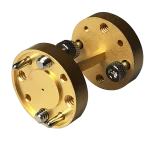
Waveguide Loss Factors: Skin Depth, Surface Finish, and Mechanical Alignment

In the world of millimeter-wave and terahertz technology, every decibel counts. You might have the most advanced RF source, but without a perfectly optimized waveguide, your signal could be dissipating as heat before it ever reaches its destination. From microscopic surface textures to the precision of a flange connection, even the smallest imperfection can lead […]

Waveguide Loss Factors: Skin Depth, Surface Finish, and Mechanical Alignment Read More »
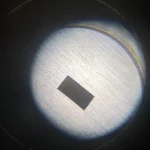
optimized lens geometry, manufacturable design, precision machining

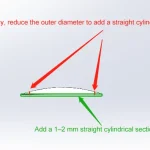
Benefits of the Updated Lens Geometry

The updated lens geometry provides:
Better clamping stability
Safer and cleaner machining
More reliable inspection
Higher structural strength
Increased yield and lower production risk
No functional performance impact
This is a textbook example of DFM (Design for Manufacturability):
a small structural adjustment that significantly enhances machining feasibility while keeping optical/RF performance intact.

Benefits of the Updated Lens Geometry Read More »

WR2.2 waveguide straight sections

WR2.2 1-Inch Straight Waveguide – S-Parameter Performance Analysis (330–500 GHz)

This Engineering Note presents the measured S-parameters (S11 & S21) of a WR2.2 1-inch straight waveguide operating in the 330–500 GHz frequency band. WR2.2 waveguides belong to the sub-millimeter and early THz regime, where electromagnetic behavior is highly sensitive to: Micron-level dimensional accuracy Surface roughness Plating thickness Flange alignment Mode purity Fabrication repeatability The test

WR2.2 1-Inch Straight Waveguide – S-Parameter Performance Analysis (330–500 GHz) Read More »

Waveguide twisted sections

Manufacturing Challenges of WR2.8 Twist Waveguides and Our Engineering Solution

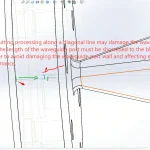
The WR2.8 twist waveguide operates in the 220–325 GHz band.With an internal cross-section of only 0.71 × 0.355 mm, WR2.8 belongs to the Millimeter wave regime where every micron matters. At these frequencies, even a slight geometric deviation—such as a few microns in cavity size or a fractional-degree twist-angle error—will immediately degrade: Insertion Loss Return

Manufacturing Challenges of WR2.8 Twist Waveguides and Our Engineering Solution Read More »